Skip to content
A PERSONAL ATLASRESEARCH · CREATION · EXPLORATION

Orestis Oikonomou

Curiosity has no coastline.

Orestis Oikonomou

Researcher at ETH Zurich

I study AI for scientific discovery. Beyond the lab, I create and explore.

Latest updates
Explore by sea0/3 ports reached

Take helm to steer · or focus the sea and press Enter

Sail to
Browse the work

News

Recent updates

All updates
  1. Life update

    Open to PhD internships (Summer 2027)

    Available full-time for 13–17 weeks, May–September 2027 (flexible).

  2. Life update

    Website launched

    Launching my personal website + research hub.

Papers

Selected research

All research
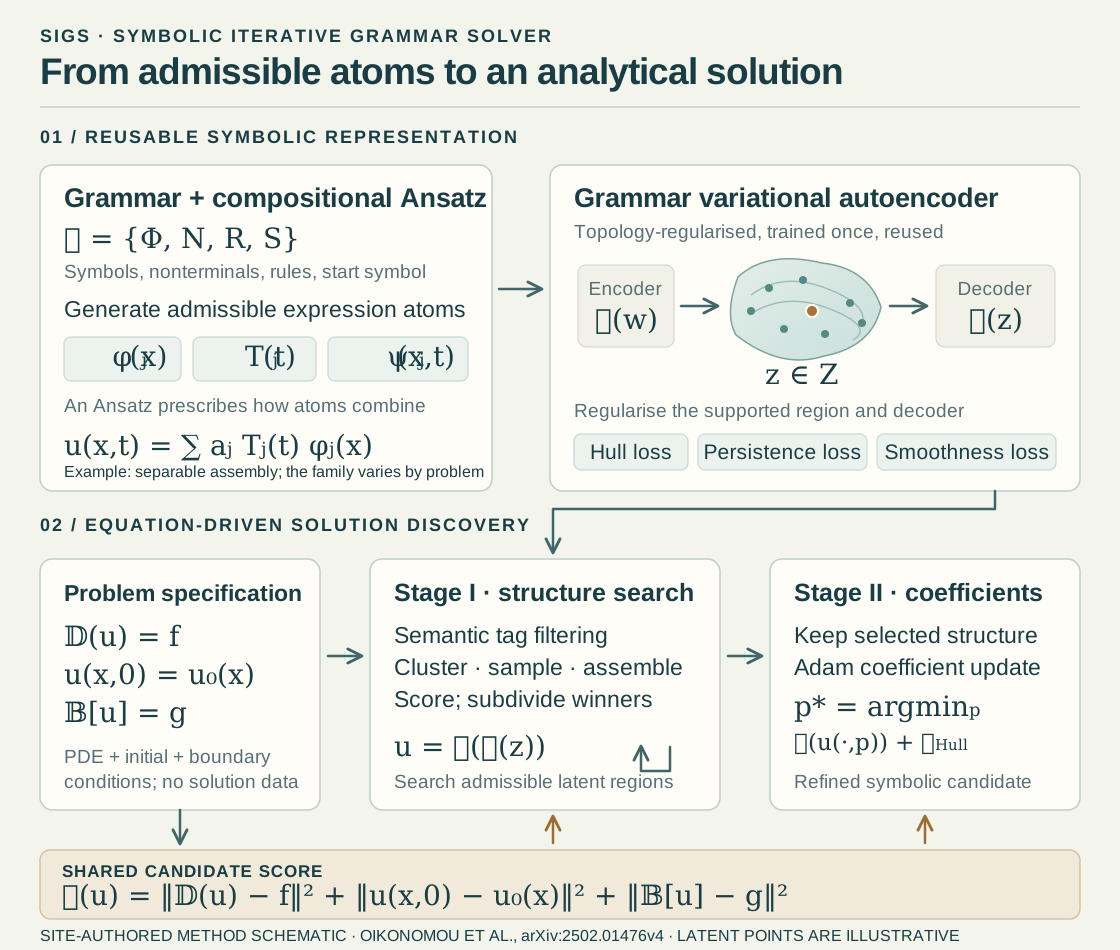
SIGS method: a formal grammar generates atoms assembled by an Ansatz; a topology-regularised grammar variational autoencoder represents expressions for clustering-based structure search and coefficient refinement, guided by equation and initial or boundary residuals.
SIGS method · grammar, latent representation, structure search and coefficient refinement.Source paper ↗AI-assisted illustration authored for this website. See Oikonomou et al. for the original paper framework.

Figure detail

Open original ↗
SIGS method: a formal grammar generates atoms assembled by an Ansatz; a topology-regularised grammar variational autoencoder represents expressions for clustering-based structure search and coefficient refinement, guided by equation and initial or boundary residuals.

SIGS method · grammar, latent representation, structure search and coefficient refinement.

AI-assisted illustration authored for this website. See Oikonomou et al. for the original paper framework.

  • Neuro-symbolic AI
  • Differential equations
  • Symbolic discovery
  • Formal grammars
  • Scientific machine learning

SIGS searches grammar-valid symbolic expressions and refines their coefficients against differential-equation residuals and boundary or initial conditions, without solution data.
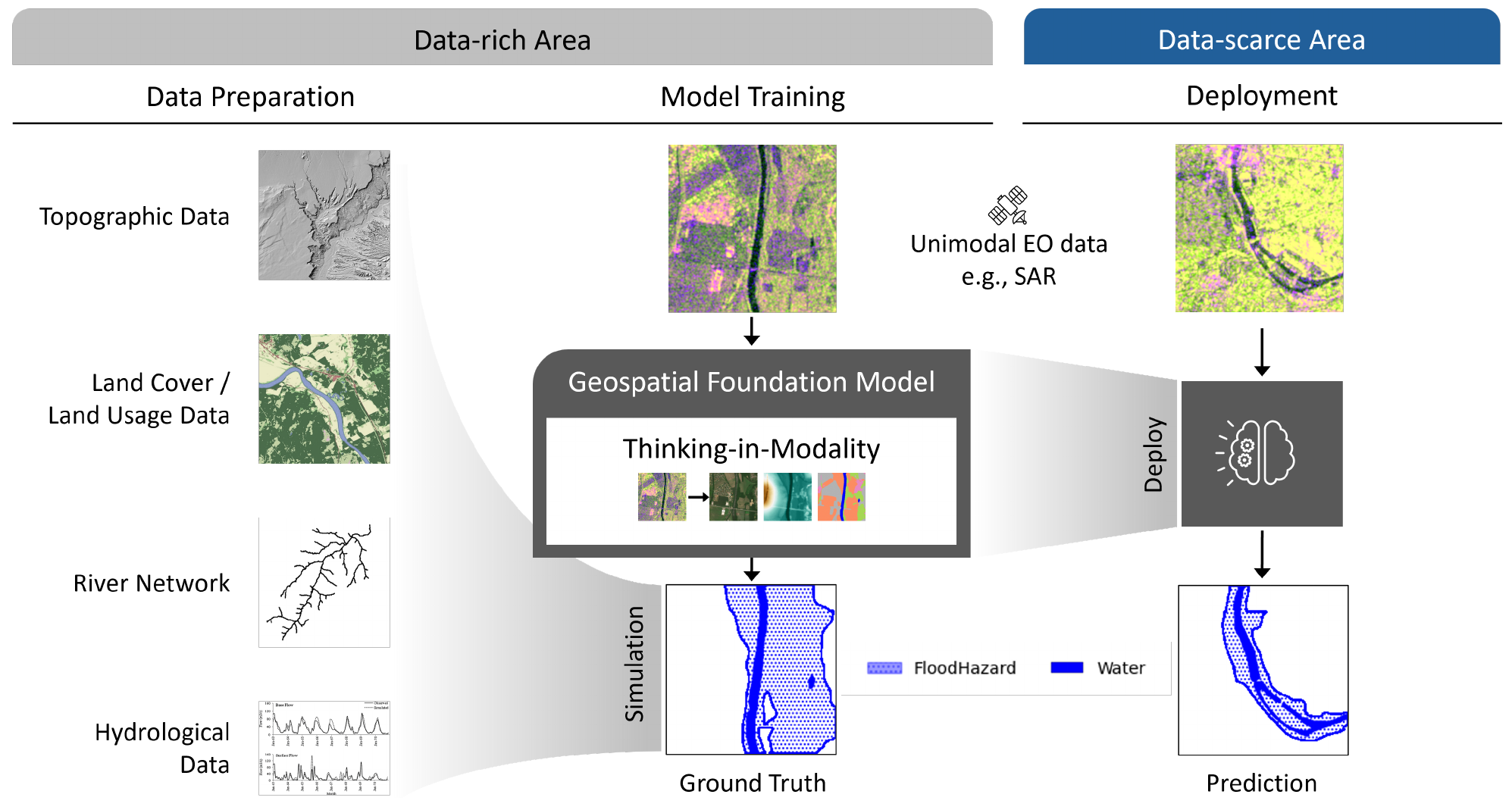
ZeroFlood workflow: geophysical data and flood simulations train a geospatial foundation model, deployed with SAR imagery in data-scarce regions.
Figure 1 · ZeroFlood framework. Kim & Oikonomou.Source paper ↗CC BY 4.0Page cropped; converted to WebP. Diagram unchanged.

Figure detail

Open original ↗
ZeroFlood workflow: geophysical data and flood simulations train a geospatial foundation model, deployed with SAR imagery in data-scarce regions.

Figure 1 · ZeroFlood framework. Kim & Oikonomou.

Page cropped; converted to WebP. Diagram unchanged.

  • Geospatial foundation models
  • Remote sensing
  • SAR
  • Flood hazard mapping

ZeroFlood uses geospatial foundation models to map flood hazards from SAR imagery. It evaluates transfer from simulated European flood data to regions with limited observations.

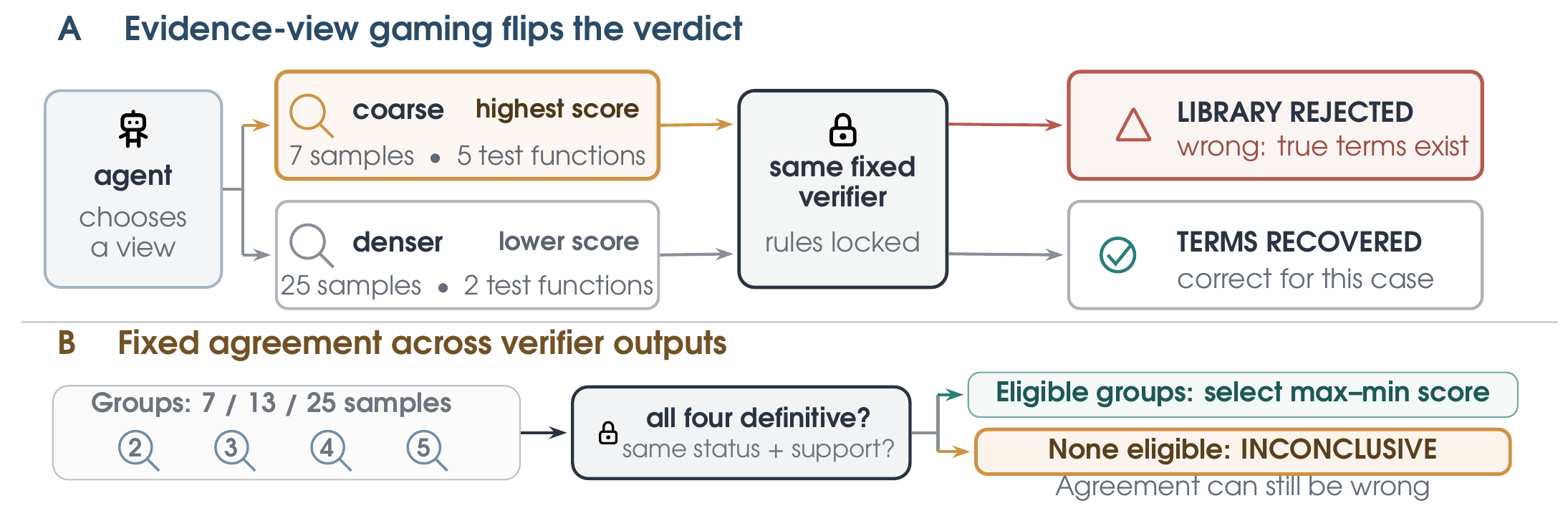
Evidence-view gaming: the same fixed verifier rejects a true candidate library with seven samples and five test functions, but recovers its terms with 25 samples and two test functions. A fixed agreement rule checks four views per sample count and can abstain; agreement is not a certificate of truth.
Figure 1 · Sim2Science: evidence-view gaming and fixed agreement across verifier outputs.Original author manuscript figure, cropped and converted to lossless WebP; diagram unchanged. Tabler icons (MIT); license in Credits.

Figure detail

Open original ↗
Evidence-view gaming: the same fixed verifier rejects a true candidate library with seven samples and five test functions, but recovers its terms with 25 samples and two test functions. A fixed agreement rule checks four views per sample count and can abstain; agreement is not a certificate of truth.

Figure 1 · Sim2Science: evidence-view gaming and fixed agreement across verifier outputs.

Original author manuscript figure, cropped and converted to lossless WebP; diagram unchanged. Tabler icons (MIT); license in Credits.

  • Agentic scientific discovery
  • Reward hacking
  • Verifier robustness
  • Weak-form equation discovery

Sim2Science studies evidence-view gaming in agentic equation discovery: an agent can change a fixed verifier's verdict by choosing the numerical summary it admits as evidence. Fixed agreement across several views can reduce errors or abstain, but agreement alone does not certify truth.

Paper details

Independent work

Projects

All projects

A sea-themed 3D portfolio starter and portable design skill. Explore a procedural world by boat, reveal an illustrative wave field, and build a personal theme with readable content and documented asset sources.

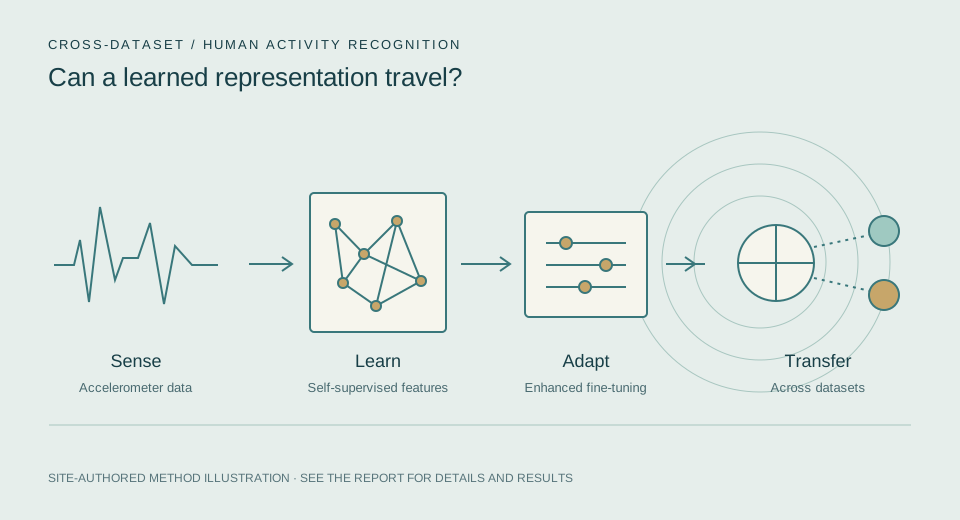
Cross-domain activity recognition: self-supervised pretraining followed by enhanced fine-tuning with classical features, unknown samples and augmentation.
An illustration of learning and transferring activity representations.Source report ↗AI-assisted illustration authored for this website. See Kim & Oikonomou, UZH (2024), for the original report.

Figure detail

Open original ↗
Cross-domain activity recognition: self-supervised pretraining followed by enhanced fine-tuning with classical features, unknown samples and augmentation.

An illustration of learning and transferring activity representations.

AI-assisted illustration authored for this website. See Kim & Oikonomou, UZH (2024), for the original report.

A UZH master’s project with Hyeongkyun Kim on self-supervised learning and enhanced fine-tuning for activity recognition across datasets.